
ECOWAS Regional Workshops on the Development of National Cooking Energy Action Plans & Capacity Building on Biochar
ECOWAS Regional Workshops on the Development of National Cooking Energy Action Plans & Capacity Building on Biochar
| Anexo | Tamanho |
|---|---|
 Concept Note & Agenda_ENG Concept Note & Agenda_ENG | 1.06 MB |
| Concept Note & Agenda_FR | 1.05 MB |
| Concept Note & Agenda_PT | 1.09 MB |
| ECREEE Presentation | 6.15 MB |
| Global Alliance in Ghana Presentation | 2.21 MB |
| GIZ ProCEAO presentation | 822 KB |
| GHACCO Presentation | 2.38 MB |
| Communication_sensibilisation | 495.01 KB |
| Genre et énergie de cuisson | 1.51 MB |
 Production et Commercialisation de Biocharbon Production et Commercialisation de Biocharbon | 2.07 MB |
| Standards and Labels for Cooking Stoves | 1.18 MB |
| REAGAM Presentation | 4.84 MB |
| Green Tech Presentation | 1.9 MB |
| GAMBIA Clean Cooking Energy Action Plan Framework | 568.32 KB |
| WACCA Workshop Report Final EN | 351.47 KB |
| WACCA Workshop Report Final FR | 579.1 KB |
| List of participants 11th of August 2014 | 2.32 MB |
| List of participants 12th of August 2014 | 2.33 MB |
| Promoting Biochar in the ECOWAS Region | 1.83 MB |
| Sustainable Financing for Biochar | 3.96 MB |
| REPORT ON THE CAPACITY BUILDING WORKSHOP ON BIOCHAR | 116.42 KB |
| Biochar list of participants 13th August 2014 | 2.2 MB |
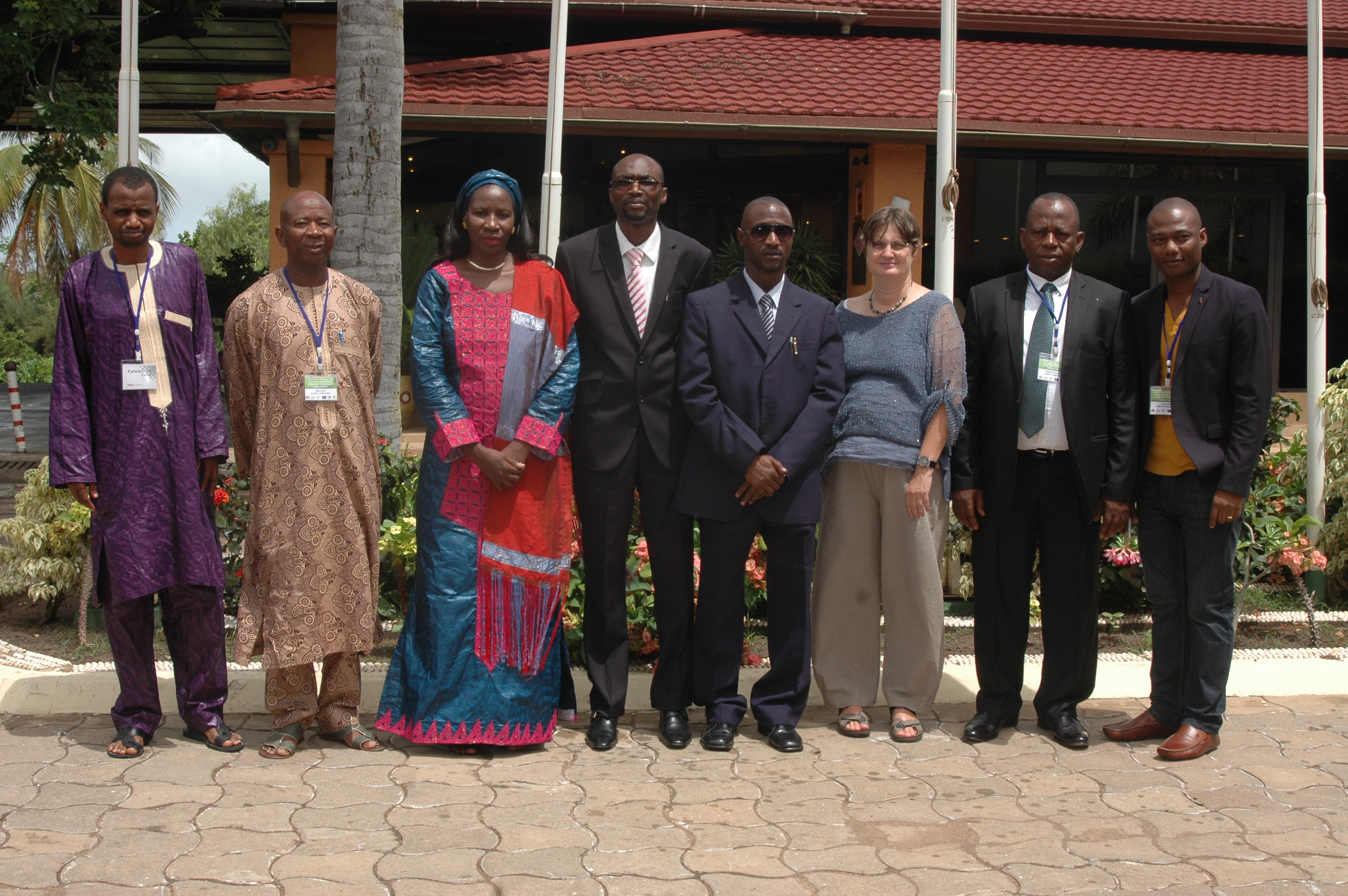
The ECOWAS Centre for Renewable Energy and Energy Efficiency (ECREEE), with the support of the Ministry of Energy of The Gambia, and in partnership with the Deutsche Gesellschaft für Internationale Zusammenarbeit (GIZ) GmbH, the Austrian Ministry of Agriculture, Forestry, Environment and Water Management, the EU Energy Facility – Science and Technology II, the University of Udine, Italy, and the Governments of Austria and Spain held the ECOWAS Regional Workshops on the Development of National Cooking Energy Action Plans and Capacity Building on Biochar from 11 – 13 August 2014 in Banjul, The Gambia.
Organized under the framework of the West African Clean Cooking Alliance (WACCA) and the Biochar Plus Project with the university of Udine respectively, the workshop brought together about 80 participants from the ECOWAS region, WACCA partners, project staff from the University of Udine, the international community and participants from the Gambian ministries of energy, forestry and the environment; private sector; standards bodies; and civil society organizations.
The workshop, which was declared officially opened by the Minister for Energy of The Gambia Hon. Dr Edward Saja Sanneh, was also addressed by the Minister for Forestry, Environment, climate change and Water - Hon. Pa Ousman Jarju, the Executive Director of ECREEE - Mr. Mahama Kappiah and the Coordinator GIZ-ProCEAO Burkina Faso – Dr. Andrea Reikat. Mr. Demba S. Bah – Deputy Permanent Secretary at the Ministry of Energy in the Gambia delivered the welcome remarks.
The workshop provided a platform to discuss:
- best practices and challenges on national clean cooking activities within and outside the region;
- entry points for the incorporation of clean cooking targets into national energy policies and strategies and tools for the development of action plans for promoting clean cooking solutions;
- principles for the establishment of independent national associations dedicated to facilitating the deployment of clean cooking technologies;
In addition to this, there was a one-day capacity building workshop on the use and benefits of the novel Biochar technology and a three-day exhibition showcasing innovative cooking technologies from the Gambia and the region.
The main highlight of the workshop was the adoption of the elements of the National Action Plan Framework on Clean Cooking Energy for The Gambia. This framework is a product of the recommendations on promoting clean cooking solutions deliberated by the participants and reflects the needs of the Gambian society on the subject matter. The elements adopted would form the basis for the elaboration of a detailed National Action Plan. The key elements are as follows:
- Undertake a comprehensive country-level study to establish a baseline and to determine nationally appropriate actions for cooking energy sector;
- Formulate or review policies and strategies for the establishment of a conducive environment for scaling up improved cooking energy technologies in The Gambia;
- Establish standards and labels to promote a level playing field for all stakeholders in the demand and supply value chain in the sector;
- Conduct training to support national action plans, addressing human capacity bottlenecks in cooking fuel supply as well as market introduction and usage of improved cooking devices and fuels;
- Conduct awareness raising and capacity building activities on the production, uses and benefits of efficient, alternative and modern cooking fuels and technologies for both domestic and productive sectors;
- Promote innovative financing mechanisms to support the mobilisation of funds from Commercial and Investment Banks, micro-financial institutions, Public-Private investors and carbon finance for scaling-up successful business models;
- Promote gender specific interventions in the cooking sector that facilitate the involvement of both gender groups in the deployment of clean cooking technologies;
- Establish an independent national coordinating body dedicated to promoting clean cooking solutions in The Gambia;
- Promote research and development on clean cooking through academic and research institutions;
- Facilitate knowledge sharing of best practices and collaborations among countries in the sub-region, especially with Senegal.
It is envisaged that in the coming months the detailed action plan for the country, containing time-specific targets, responsible institutions and budget will be developed by the Government of The Gambia with the support of ECREEE and other development partners.
To see the photo gallery from this event please click here.
For documents presented during the Capacity Building workshop on Biochar by the University of Udine, please click this link.
Please find below all documents related to the event including the Concept Note & Agenda, Presentations and Reports.


ECREEE SECRETARIAT
Achada Santo Antonio
Electra Building, 2nd floor
C.P. 288, Praia, Cape Verde
Tel: +238 2604630, +238 2624608
Fax: +238 2624614
E-mail: info(a)ecreee.org
Skype: info-ecreee


Bem-vindo ao site do Centro Regional da CEDEAO para Energias Renováveis e Eficiência Energética (ECREEE)