
Providing a robust enabling environment investment essential if ambitious ECOWAS clean energy mini-grid targets to be met
Providing a robust enabling environment investment essential if ambitious ECOWAS clean energy mini-grid targets to be met
African Energy Week workshop identifies other barriers and opportunities for achieving 2030 access targets in high-impact region
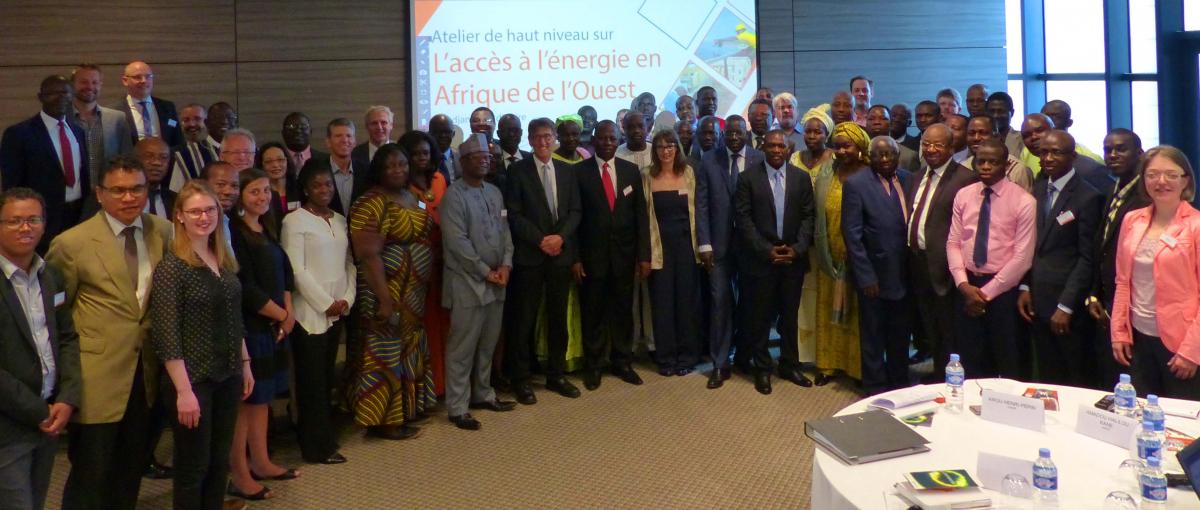
Abidjan, May 3: With a high percentage of the West African population living in remote rural areas, clean energy-powered mini-grids (CMEGs) have been identified as an essential tool for achieving universal energy access. An ambitious target of building 128,000 in West Africa by 2030 has been set. How to achieve this was the main topic of a joint high-level workshop organised by the Smart Villages Initiative, the ECOWAS Centre for Renewable Energy and Energy Efficiency (ECREEE), and the European Union Energy Initiative Partnership Dialogue Facility (EUEI PDF). Held as part of the AfDB’s Energy Week in Abidjan, Côte d'Ivoire, the workshop served to kick off a wider capacity-building engagement on CEMGs in the ECOWAS region, including an upcoming regional workshop as well as the provision of high-quality technical assistance for the improvement of the enabling environment. In addition, Smart Villages took the opportunity to share conclusions and recommendations from its West Africa engagement programme held over the last 12 months, which has looked into other SDG7 and energy-related access issues, such as the water-food-energy nexus.
“The workshop was highly productive and we would like to thank our partners ECREEE and EUEI PDF,” says Dr. John Holmes, Co-Leader of the Smart Villages Initiative. “There is a growing amount of cooperation across ECOWAS already on Distributed Renewable Energy issues. However, such is the scale of the challenge and the ambitious targets set that we concluded several issues must be urgently addressed. Chief amongst these is finance and how to create public-private partnerships with a clear model and rate of return for potential investors. We would also like to highlight the need for equipment and operating standards as well as appropriate tariffs as key to creating a sustainable operating environment. However, this is not to advocate a “one-size fits all” top-down approach, since our work in ECOWAS has reinforced one of the main overall findings of the Smart Villages Initiative – namely that local conditions vary enormously and must be taken into account. The lessons from this workshop will now be incorporated into our final reports and policy briefs to be released in the near future.’
ECREEE’s Executive Director, Mr. Mahama Kappiah, commented: “This workshop is indeed a wonderful example of fruitful and constructive partnership among different stakeholders to support the tremendous efforts going on in each ECOWAS Member State”. He also highlighted that: “With budgetary constraints limiting efforts to extend on-grid service to some parts of the region, clean energy mini-grids are an excellent solution and they represent the least-cost option for thousands of villages in rural areas. Nevertheless, enabling the environment for investment is essential to achieve the ambitious targets on access, and ECREEE and its partners are ready to continue to support the countries in their efforts to improve it.” Finally, he pointed out that “As the issue of tariff regulation is always at the centre of the debate, we are happy to have hosted on the last day of the conference the first regional stakeholder workshop on the Renewable Energy Tariff Toolbox that we are jointly developing together with EUEI PDF. We believe this instrument can be useful for the countries to accelerate their ongoing efforts to promote renewable energy.”


ECREEE SECRETARIAT
Achada Santo Antonio
Electra Building, 2nd floor
C.P. 288, Praia, Cape Verde
Tel: +238 2604630, +238 2624608
Fax: +238 2624614
E-mail: info(a)ecreee.org
Skype: info-ecreee


Bienvenue sur le site du Centre régional de la CEDEAO pour les énergies renouvelables et l'efficacité énergétique (ECREEE)