
Publications


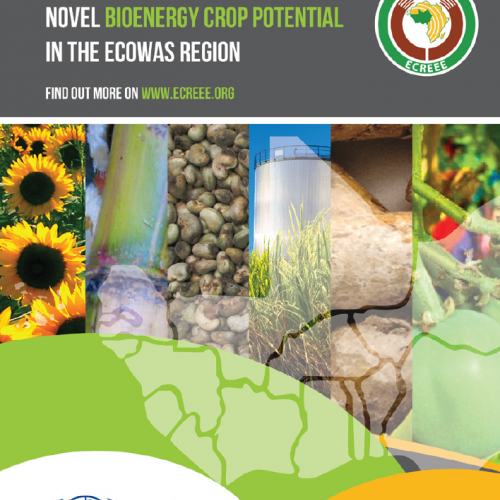
The project "Regional potential assessment of novel bio energy crops in fifteen ECOWAS countries" was started by the different project partners (ECREEE, UNIDO, IIBN and QUINVITA) based on the need to make an overall assessment of a series of novel potential bio energy crops which can or could be grown and processed in the future in the 15 ECOWAS countries. This project fits in a broader strategic analysis of alternative energy needs and production, the key mandate of the main funding partner in the project, ECREEE.

This study examines the impact of a market transformation to off-grid lighting in terms of job loss and job creation. It focuses on the Economic Community of West African States (ECOWAS), where 178 million people lack access to the electricity grid.

This research explores how subsidies can impede the entry of efficient lighting technologies into off-grid markets. The issue of fuel subsidies is key to understanding the dynamics of the off-grid lighting market.

The 1.3 billion people around the world who earn approximately one dollar per day pay a much higher percentage of their income for low-grade and polluting fuel-based illumination than people who have regular access to electric lighting.
Obstacles to the use of renewable energies and energy efficiency in the framework of a regional climate change policy in West Africa.
The Publication provides the status of implementation of energy sector NDC goals and commitments in the ECOWAS Region towards the achievement of the Paris Agreement. Launched at the United Nations Framework Convention on Climate Change Twenty Third Conference of Parties “UNFCCC COP23”on the 9th of November 2017.
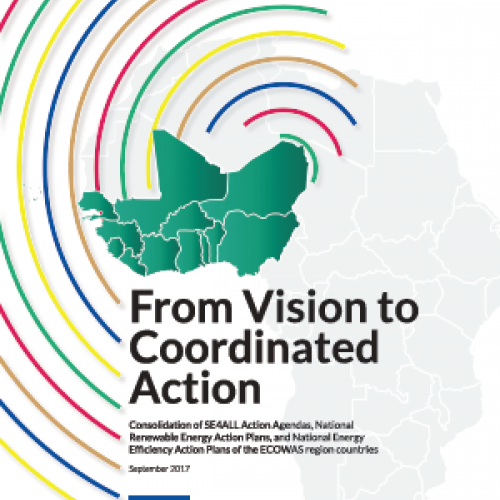
For more information on the ECREEE SE4ALL NETWORK please visit: www.se4all.ecreee.org

This document is the first Regional Progress Report on renewable energy, energy efficiency and energy access in ECOWAS region. It is based on the ‘Regional Monitoring and Reporting Framework for the ECOWAS Renewable Energy and Energy Efficiency Policies and the Sustainable Energy Country Action Plans'.
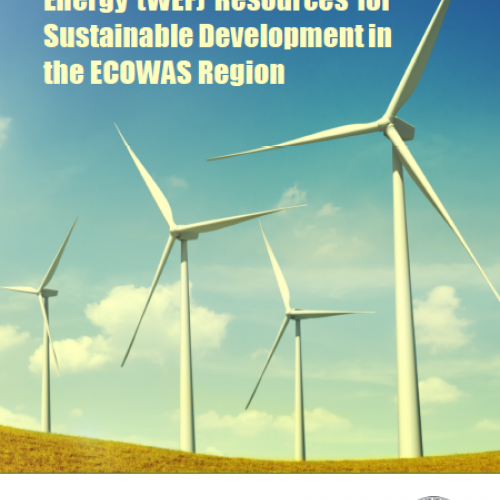
West African countries are faced with ever-increasing demands for food, water and energy, a challenge compounded by climate change. The region is confronted with significant challenges in the way it manages and utilizes water, energy, and food. Isolated management of these resources creates barriers to harnessing the benefits of the nexus approach. These benefits include enhancing water, energy, and food security by increasing efficiency, reducing trade-offs, building synergies, and improving governance across the sectors.
Pages
ECREEE SECRETARIAT
Achada Santo Antonio
Electra Building, 2nd floor
C.P. 288, Praia, Cape Verde
Tel: +238 2604630, +238 2624608
Fax: +238 2624614
E-mail: info(a)ecreee.org
Skype: info-ecreee


Welcome to the website of the ECOWAS Regional Centre for Renewable Energy and Energy Efficiency (ECREEE)